


Books & Breath Book Club Review: The Recognition Sūtras by Christopher Hareesh Wallis

This post is for everyone who couldn't make it to our last gathering — so you don't miss the conversation, just the time zone. It's also for anyone who found their way here looking for an honest, thoughtful take on this book. You're welcome here too.
The Recognition Sūtras — Christopher Hareesh Wallis
Genre: Nondual Philosophy / Tantrik Yoga / Spiritual Commentary
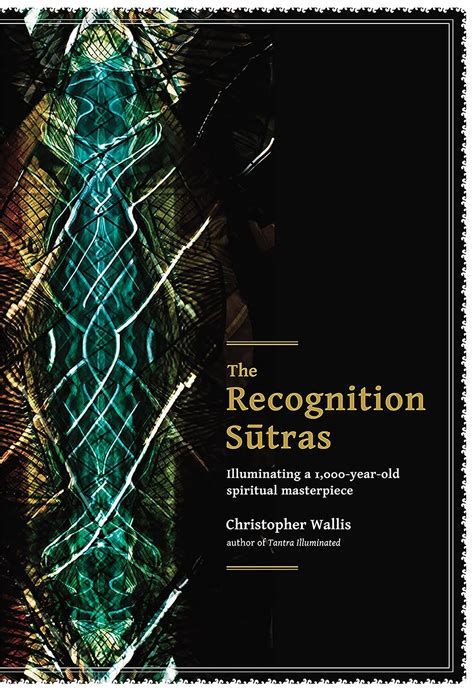
Some books you read. Some books read you. The Recognition Sūtras did something else entirely — it held up a mirror, and several of us were still blinking at the reflection long after the call ended.
This is Wallis's complete translation and commentary on the Pratyabhijñā-hṛdaya, a 1,000-year-old Sanskrit masterpiece by the Kashmiri scholar Kṣemarāja.
The text's central argument — that your deepest nature is not something to be attained but something to be recognized — sounds deceptively simple.
Something has quietly shifted.
What the group said
There was a palpable sense of privilege in the room — a feeling that we'd been trusted with something rare. The consensus was almost immediate: this is not a book you can rate. As one member put it, "How do you rate the Bible as an ancient text? It's above and beyond a rating system." That framing landed. We shelved the stars.
What we could speak to was the quality of Wallis's scholarship and the generosity of his explanations. He is both rigorous academic and sincere practitioner, and that combination — rare in any field — is what makes this book exceptional. He never lets the Sanskrit become a wall. He never lets the philosophy become a performance. He genuinely wants you to understand, and more than that, he wants you to experience what he's pointing at.
"To bow is the beginning and the ending of the spiritual path. It is to humble oneself, to acknowledge the infinite majesty of the Divine. It is awe in the face of the great mystery."— Wallis, commenting on Kṣemarāja's opening verse
We admire his dedication. The translation alone would have been enough — and it's excellent. But the layer of contemporary commentary he weaves around it: drawing on neuroscience, Western philosophy, contemplative psychology, and his own practice — that is what transforms an ancient text into a living document. We found ourselves highlighting entire paragraphs. Not sentences. Paragraphs!
What stayed with us
The teaching that most rippled through our conversation was the idea of the Five Acts — that every moment of experience, every thought arising and dissolving, is a miniature enactment of the cosmic cycle of creation, preservation, dissolution, concealment, and grace.
The invitation is to notice that gap between one thought and the next: that small window where, if you're paying attention, you might catch a glimpse of the awareness that underlies the whole process.
We also spent time with the Seven Perceivers from Chapter Three — that map of consciousness from the most contracted (the ordinary, separated ego-self) all the way to the absolute nonduality of Śiva.
What moved the group was Kṣemarāja's insistence that these aren't levels out there in some cosmic hierarchy. They are seven ways of experiencing reality that already exist within you, available to you now.
"The world is as you see it. So change the prescription of your glasses."— Swāmī Muktānanda, quoted by Wallis in Chapter Three
Chapter Ten generated particular warmth. The teaching that even a thoroughly bound, confused, suffering human being is performing the exact same Five Acts as God — just without recognizing it — struck the group as both surprising and quietly compassionate. There is no state in which you are cut off from the Divine. Not even the worst ones.
And then there was the Fire of Awareness from Chapter Fourteen — the contemplative question of where thoughts go when they disappear.
A lot still to contemplate
We said this out loud and it felt true: this is not a book you finish. It finishes a round with you and then waits. Some chapters — particularly Three and Eight — are dense with concepts rooted in Kṣemarāja's 11th-century intellectual world and required more patience. But as Wallis himself reassures the reader: skip ahead when you're stuck. Come back later. The gems in the second half are worth the journey.
There is also something to be said for sitting with a book this size — both philosophically and literally. The recognition it asks of you isn't intellectual. It's a shift in orientation. And those shifts tend to happen quietly, in the background, long after you've closed the cover.
Couldn't read the book? Here's where you can read the chapter summaries, quotes, and discussion questions in our study guide.
A note on what "tantra" actually means here
People came to this book wondering about that word. It's worth naming: the word tantra itself simply means "a system" or "a loom that weaves things together" — it refers to a body of teachings, not a bedroom practice.
What got conflated with sexuality in the West is a tiny, specific thread of a vast philosophical tradition, and it is not this one.
The Recognition Sūtras belongs to the Kashmir Shaivism tradition — a lineage of nondual philosophy and contemplative practice focused entirely on the nature of awareness, the mechanics of consciousness, and the direct path of recognition.
The practices are things like watching thoughts dissolve, centering in the breath, and the extraordinary krama-mudrā of being simultaneously absorbed inward and fully open to the world. The body is honored and embraced — but as the vehicle of awakening, not a subject in itself. Wallis addresses this graciously throughout.
The philosophy is, if anything, more intimate and more demanding than what most people expect when they come looking for "tantra."
Next up
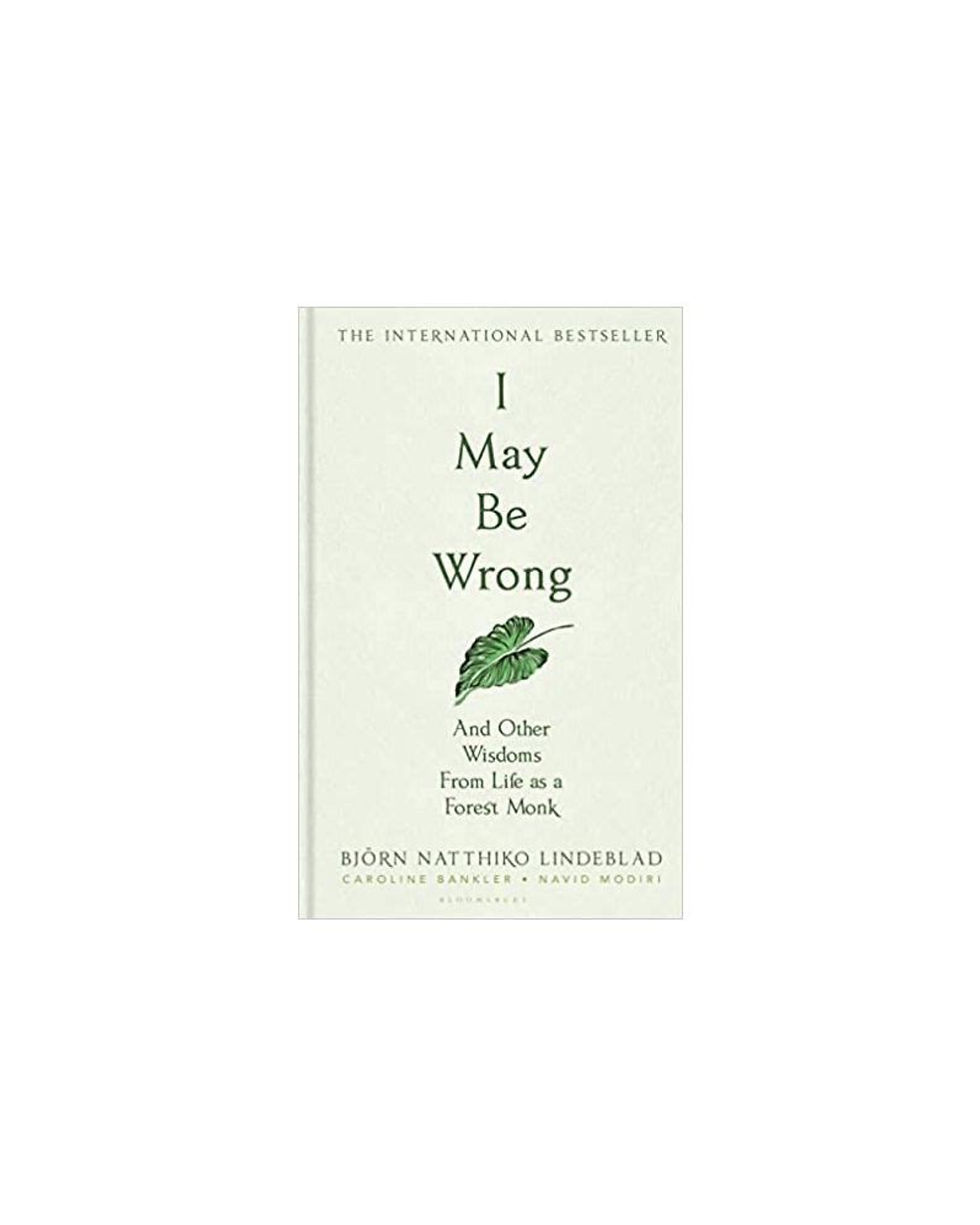
I May Be Wrong
Björn Natthiko Lindeblad
After sitting with a 1,000-year-old philosophical masterpiece, we turn to something quieter — a memoir of a Swedish economist who became a Buddhist monk for 17 years, then left the forest to find his way back into the world. A different kind of recognition, perhaps.
April Meeting:
Saturday, 18 April 2026 at 9:00 AM Taiwan Time
In your time zone:
New Zealand (NZDT) — Saturday 2:00 PM
Australia (AEDT) — Saturday 12:00 PM
US Eastern — Friday, April 17 at 9:00 PM
US Central — Friday, April 17 at 8:00 PM
US Pacific — Friday, April 17 at 6:00 PM
There's more we didn't get to — there always is with a book this rich. If something is still sitting with you, a question you're turning over or a passage you keep returning to, bring it to the Reader's Lounge. That's exactly what it's there for.
Sign up here.

Comments